
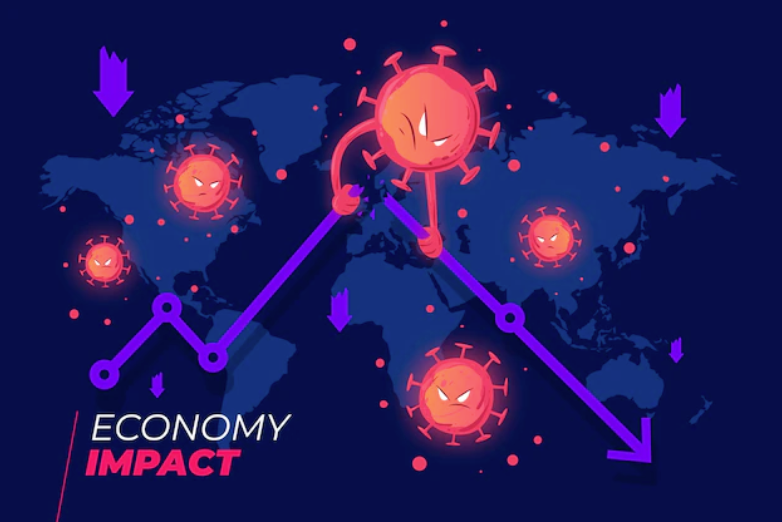
Anxious investors have sent stock markets plummeting as the number of cases of COVID-19 – the disease caused by the new coronavirus – climbs. The global economy is clearly vulnerable to shocks at the best of times, but the rapid spread of the virus has created a fresh wave of uncertainty.
Governments and central banks are being forced to weigh up whether to ramp up stimulus measures to support growth, or let the market forces take their course and risk a deeper recession.
So far, the virus has had a limited impact on the real economy outside of China. But with large parts of the world now affected, that could change.
The tourism and retail sectors have already been hit, while the fear of contagion is also crimping business travel and disrupting global supply chains.
The longer the outbreak lasts, the greater the risk of a full-blown recession.
The World Health Organisation has warned that the virus is “one of the most prominent threats to global health in 2020”.
The coronavirus is ravaging across the world, causing death, serious illness and changing life as we know it. Beyond the obvious human toll of this fast spreading disease; how is it affecting different aspects of public and private life like individual incomes, employment, the well-being of women and children and access to public services?
A new report released this week, “How COVID-19 is changing the world: a statistical perspective”, is trying to answer these questions. It presents a snapshot of some of the latest information available on how COVID-19 is affecting people’s lives, also putting a spotlight on the impacts on specific population groups and geographical regions.
The statistics presented in the report, launched by 36 United Nations agencies and international organizations that are members of the Committee for the Coordination of Statistical Activities (CCSA), show inflections in trends that would have been unimaginable only a few months ago. For instance, by the end of April, 212 countries, territories or areas had reported confirmed cases of COVID-19.
In the first four months of 2020, more than 3 million cases of infection had been confirmed and more than 210,000 deaths. Some startling economic numbers include a 9 percent year-on-year fall in global production and manufacturing output, nowcasts that the value of global merchandise trade will fall by almost 27 percent in the second quarter of 2020, the largest fall in global commodity prices on record (-20.4 percent between February and March 2020).
we see a dramatic loss of employment – with a decline of almost 10.5 percent in total working hours, the equivalent of 305 million full-time workers. And some 1.6 billion students have been affected by school closures and the crisis will push an additional 40–60 million people into extreme poverty.
The Novel coronavirus, COVID-19, is a serious global health threat.
The virus causes severe respiratory illness, and has killed thousands of people in just a few months. In response to the pandemic, governments around the world have taken emergency measures to try to contain the virus. But COVID-19 is not just a health crisis, it is also a major economic shock. The virus has already disrupted global supply chains and tourism, and has led to a slowdown in global economic growth.
In the short term, the COVID-19 pandemic will likely lead to a slowdown in global economic growth. The World Bank has already revised its forecast for global growth in 2020, and many other economists are predicting a global recession. The tourism industry has been hit particularly hard, as people have cancelled their trips in response to the outbreak. Airlines, hotel chains, and other travel-related businesses have seen their profits plummet.
In the long term, the COVID-19 pandemic could have a very serious impact on the global economy. The virus has already disrupted supply chains and the flow of goods and services around the world. This could lead to a longer-term decline in global trade and investment. The virus could also lead to a decline in global productivity, as workers are unable to travel or work due to the outbreak.
Governments and businesses around the world are currently facing a major economic challenge due to the COVID-19 pandemic. The virus has already disrupted global supply chains and tourism, and has led to a slowdown in global economic growth. In the short term, the COVID-19 pandemic is likely to lead to a global recession. In the long term, the virus could have a very serious impact on the global economy.
The report also provides a glimpse into the challenges facing national statistical offices at the moment. At a time when statistics are most needed, many countries are struggling to compile basic official statistics, highlighting once again the need to invest in data and statistics, and the importance of having modern, resilient national statistical systems and data infrastructure.
The United Nations and other members of the international statistical community continue to work together, in partnership with national statistical offices and systems around the world, to ensure that the best quality data and statistics are available to support decision-making during and after the current health crisis. By having this access to reliable and accurate data, the world can make informed decisions on how best to build back better.
Conclusion
For now, it is too early to tell the extent to which COVID-19 will impact the world economy. The virus has already caused significant disruptions to global supply chains and tourism. The International Monetary Fund has already downwardly revised its global growth forecast for 2020. It is possible that the pandemic could cause a global recession.

